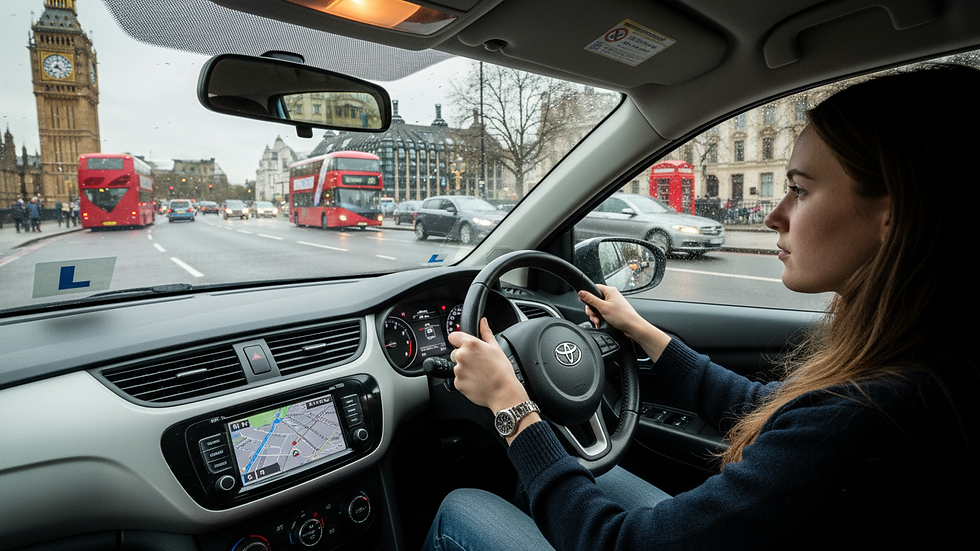
Introducing a minimum learning period for learner drivers
The Department for Transport (DfT) is asking for views on potential major changes to how people learn to drive in Great Britain.
This could be the biggest reform since the driving test was introduced 90 years ago.
Here’s what you need to know.
🔎 What Is Being Proposed?
The consultation focuses on Category B licences (standard car licences).
The DfT is exploring:
A minimum time period between passing the theory test and taking the practical test
A minimum number of supervised driving hours
A mandatory logbook to record practice
A structured learning syllabus
Rules on how required learning should be completed
There is no preferred option yet.The government wants feedback before making decisions.
🎯 Why Now?
Young drivers remain a high-risk group.
In 2024, 273 people were killed in collisions involving drivers aged 17–24
Young drivers make up 6% of licence holders
But were involved in 24% of fatal and serious collisions
Although progress has been made:
448 deaths (1990)
158 deaths (2010)
73 deaths (2024)
That’s an 84% reduction since 1990
But the risk remains high — especially for young male drivers.
🏥 The Wider Impact
Road collisions cost more than lives.
In 2024:
£3 billion in medical and ambulance costs to the NHS
£6.9 billion in lost economic output
Safer roads mean:
Less pressure on the NHS
Stronger economic growth
Lower long-term costs
Safer communities
📘 What Is a Minimum Learning Period (MLP)?
An MLP could include:
A required number of months as a learner
A set number of supervised driving hours
A mandatory logbook
A structured syllabus covering:
Different road types
Weather conditions
Traffic environments
The aim:
More real-world experience
Better judgement and hazard awareness
Safer independent driving
🚦 What About After You Pass?
There is already a 2-year probation period for new drivers.
If a driver gets:
6 or more penalty points
Their licence is revoked
They must retake both theory and practical tests
The government is now looking at strengthening pre-test measures, not just post-test rules.
📊 Why Make It Mandatory?
Previous voluntary schemes (Driver2020 project) showed:
Very low participation
No measurable reduction in collisions
The conclusion:
Voluntary measures don’t work at scale
Mandatory measures may have greater impact
International evidence suggests minimum learning periods can reduce young driver collisions.
💷 What About Insurance Costs?
The government has set up a motor insurance taskforce with HM Treasury.
Insurance premiums are based on:
Age
Driving experience
Claims history
Vehicle type
If collisions involving young drivers fall:
Insurance premiums may reduce over time
But insurers set their own risk levels.
⚖️ What Are the Concerns?
The government recognises potential challenges, including:
Young people who need a licence for work
Carers
Disabled learners
Drivers with foreign licences
There are no simple solutions.That’s why this consultation is open.
🗣 Who Can Respond?
The DfT wants views from:
Learner drivers
New drivers
Parents and guardians
Driving instructors
Road safety groups
Academics
Anyone with an interest in road safety
📝 What This Means for Learners & Instructors
If introduced, these reforms could:
Change how long learners train before test
Increase structured lesson planning
Add documentation requirements
Shift focus from “passing the test” to “driving for life”
This is about building competence, experience and responsibility — not just test readiness.