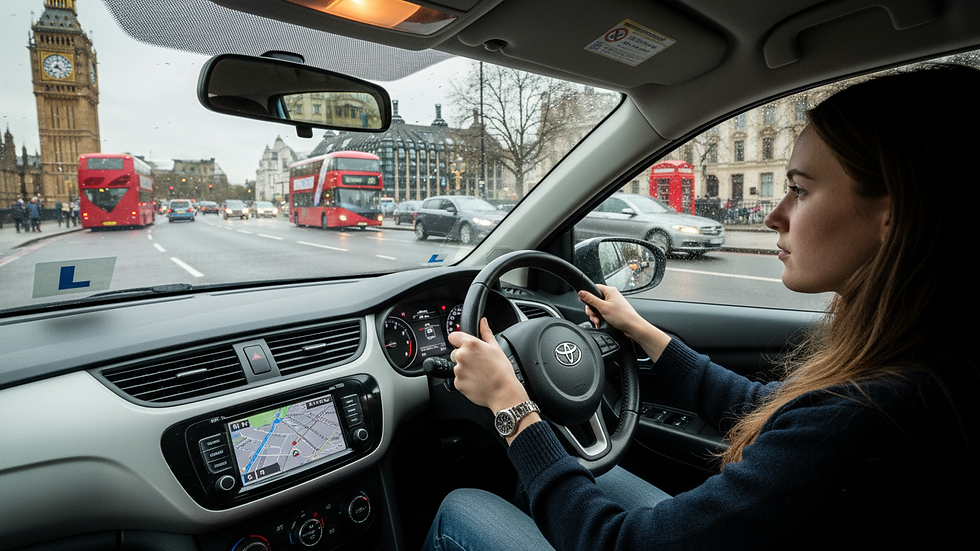
Content Creators in Driver Training – Helping the Industry or Hurting It?
The Rise of the Driving Instructor Influencer
Scroll through social media and you’ll see them everywhere.
Driving instructors with:
50k followers
Viral roundabout clips
“Exposing learner mistakes” reels
Hot takes on examiners
Dramatic reactions in the passenger seat
Welcome to the era of the Driver Training Content Creator.
But here’s the question nobody really wants to ask:
Is driver training the right place for influencer culture?
Or should instructors focus on teaching — not performing?
Let’s Be Fair First – Social Media Isn’t the Enemy
Social media, used properly, can be powerful.
It can:
Educate learners
Promote road safety
Show what real lessons look like
Reduce learner anxiety
Market a driving school effectively
There’s nothing wrong with using platforms like Instagram, TikTok or YouTube to grow a business.
In fact, smart marketing is part of running a modern driving school.
But that’s not really the issue.
The Real Problem: When Attention Becomes the Goal
The issue begins when:
Views matter more than accuracy
Shock value replaces professionalism
Drama gets more clicks than education
“Going viral” becomes more important than getting it right
And this is happening more often than many want to admit.
Some instructors are now building brands around:
Mocking learner drivers
Criticising examiners publicly
Over-simplifying complex rules
Giving bold, black-and-white answers to grey-area situations
That kind of content spreads fast.
But fast doesn’t mean correct.
Misinformation Spreads Faster Than Experience
Here’s the uncomfortable truth:
A driving instructor with 20 years of experience but no social presence may be ignored…
While someone with 100,000 followers can post a 30-second clip and shape public opinion overnight.
That’s influence.
And when that influence contains:
Outdated advice
Personal opinion presented as fact
Incomplete explanations
Oversimplified road rules
Learners absorb it — often without question.
Because if someone has a large following, people assume they must know what they’re talking about.
But follower count is not a qualification.
The Dunning-Kruger Problem in Driver Training
In every industry, confidence online doesn’t always equal competence offline.
Driver training is no different.
Some content creators:
Speak with total certainty
Deliver dramatic opinions
Offer “one size fits all” answers
Frame everything as black or white
But real driving is nuanced.
Roundabouts aren’t always identical.Junctions vary.Examiners apply judgement.Hazards are contextual.
Teaching requires depth.
Social media rewards simplicity.
There’s the tension.
Are Some Instructors Teaching… Or Performing?
Let’s ask a tough question:
If a lesson includes multiple camera angles, microphones, dramatic reactions and constant filming…
Is the learner getting full attention?
Or are they part of content production?
Now, some instructors manage this professionally.
But others?
It can feel like the lesson exists to create clips.
That shifts priorities.
And driver training is not entertainment.
It’s safety education.
The Risk to Learners
Learners today:
Consume short-form content constantly
Prefer fast answers
Trust confident voices
Often don’t cross-check information
So when they see:
“Always do this at a roundabout.”“You will fail if you do that.”“Examiners hate this.”
They internalise it.
Even when reality is more flexible.
This can:
Create anxiety
Cause arguments in lessons
Undermine structured teaching
Spread confusion about test standards
And once misinformation spreads, it’s hard to undo.
The Pressure It Creates for Other Instructors
There’s another side to this.
Instructors who focus quietly on teaching can start to feel pressure:
“Should I be posting more?”
“Am I missing out on business?”
“Do I need to act bigger online?”
The algorithm rewards noise.
But driver training rewards patience, professionalism and consistency.
Not every good instructor wants to become a public personality.
And they shouldn’t have to.
But Here’s the Balanced View
Not all content creators are a problem.
Some are excellent.
Some use social media to:
Explain complex junctions clearly
Promote road safety awareness
Share DVSA updates responsibly
Encourage good habits
Support nervous learners
Those instructors raise standards.
They educate beyond their own pupils.
That’s positive.
The issue isn’t content creation itself.
It’s intention.
Teaching First. Content Second.
The real question isn’t:
“Should instructors use social media?”
It’s:
“Is teaching still the priority?”
A professional driving instructor should:
Stay current with regulations
Focus on learner development
Prioritise safety over views
Avoid misleading generalisations
Represent the industry responsibly
If social media supports that — great.
If it distorts it — that’s a problem.
Is Driver Training the Right Industry for Influencer Culture?
Driver training is different from:
Fitness
Fashion
Travel
Entertainment
Because mistakes here have real consequences.
We’re not talking about poor gym form.
We’re talking about vehicles weighing over a tonne.
We’re talking about public roads.
We’re talking about lives.
That carries responsibility.
Influence in this space should be handled carefully.
A Possible Middle Ground
Maybe the solution isn’t to reject content creators.
Maybe it’s to raise standards.
What if:
Influencer instructors fact-checked before posting?
More experienced instructors shared their expertise online?
The industry encouraged accuracy over drama?
Followers asked better questions?
Social media isn’t going away.
So perhaps the answer is professionalism within it.
Final Thought: What Do Learners Deserve?
At the end of the day:
Learners deserve clarity.They deserve accuracy.They deserve instructors focused on them — not on the algorithm.
Driver training isn’t about personal branding.
It’s about producing safe, competent drivers.
If content helps that mission — use it.
If it distracts from it — rethink it.
Because teaching should never be secondary to performing.
Over to You
What do you think?
Is social media helping raise standards in driver training?
Or is it turning instructors into entertainers?
Let’s have the conversation.